JDM Japanese Drift Master System Requirements: What You Need to Hit the Apex
If you've ever dreamed of sliding through Japan’s legendary mountain passes in a Nissan Silvia or a Mazda RX-7, JDM: Japanese Drift Master is the game for you. Released on May 21, 2025, this open-world, story-driven drift simulator from Gaming Factory lets you explore Japan’s drifting culture with licensed cars, challenging turns, and an immersive manga-style story. But before you dive into Guntama Prefecture and tackle its winding Tōge roads, you’ll want to make sure your PC can handle the ride.
Here’s the lowdown on JDM Japanese Drift Master system requirements - practical, clear, and tuned for real-world use.
Play JDM Japanese Drift Master @ 2Game Today!
JDM Japanese Drift Master System Requirements

Minimum System Requirements
If you’re aiming to enjoy JDM at a stable 60 FPS in FullHD on Low settings, here’s what you need:
- 64-bit processor and operating system
- OS: 64-bit Windows 10/11
- Processor: Intel i5-9400F or Ryzen 5 2600
- Memory: 16 GB RAM
- Graphics: Intel Arc A580 or GeForce GTX1660 or Radeon Rx590 8gb
- DirectX: Version 12
- Storage: 18 GB available space
Playing on minimum settings will get you smooth drifting action, but expect to compromise on visual fidelity. Low settings are perfect if your rig is solid but not cutting-edge.
Recommended System Requirements
For a full-throttle experience with High settings at 60 FPS in FullHD, you’ll want something more beefy:
- 64-bit processor and operating system
- OS: 64-bit Windows 10/11
- Processor: Intel i7 11700k or Ryzen 5 7600
- Memory: 32 GB RAM
- Graphics: Intel Arc B580 or GeForce RTX3060Ti or AMD Radeon RX6700
- DirectX: Version 12
- Storage: 18 GB available space
With these specs, you can enjoy JDM: Japanese Drift Master at its best. Think sharper shadows, detailed car paint, and fluid traffic on mountain passes that will make you feel like a true drift master.
Why Specs Matter in JDM: Japanese Drift Master

This isn’t your average arcade racer. JDM features:
- Two driving models: Arcade for beginners and Simcade for skilled drifters seeking full control.
- Open-world exploration: Over 250 km of roads, dynamic weather, and day-night cycles.
- Licensed cars: Nissan, Honda, Subaru, and Mazda cars with deep mechanical and visual tuning options.
- Story-driven campaign: Hand-drawn manga pages tell a tale of second chances while you compete in 40+ narrative-driven events.
- Authentic audio: Original car recordings paired with genre-specific radio stations like J-music, Phonk, and Eurobeat.
All these features demand a capable machine. While a minimum-spec PC can get you on the road, a recommended setup ensures smooth drifting without stutters, especially on more complex Tōge roads, or in the cityscape sections.
Pro tip: Both minimum and recommended specs note that an SSD is recommended. Fast storage reduces load times when switching between open-world areas and instanced drift events, so you’ll spend more time sliding through corners and less time staring at loading screens.
Specs Checked, Get Ready to Drift

Whether you’re tuning up a classic AE86 or going full visual kit on a Nissan GT-R, knowing the JDM Japanese Drift Master system requirements ensures your rig is ready for action. Hit the right specs, and you’ll enjoy a beautiful, smooth, and immersive journey into Japan’s legendary drifting culture.
Get your tires squealing, your car tuned, and your PC ready, because Guntama’s roads are calling. Happy drifting!
Play JDM Japanese Drift Master @ 2Game Today!
Get ready to Drift
Mount & Blade 2 War Sails Features – Your Ultimate Guide to Calradia’s New Age of Naval Chaos
For years, Mount & Blade players have joked that the only thing missing from Calradia’s endless civil wars was boats. Preferably ones that exploded dramatically. Well, TaleWorlds has finally heard you.
Mount & Blade 2: Bannerlord War Sails launches today, November 26th, 2025, and it rewrites how the entire continent works. From new factions, new maps, and new systems, to burning sails, shattering oars, and horse-archer-inspired warships, this expansion promises the most ambitious shakeup the series has ever seen.
So, buckle up and keep your oars inside the vessel at all times, as we run through the top Mount & Blade 2 War Sails features. There's a lot to cover!
Play the War Sails DLC for Mount & Blade 2: Bannerlord now!
Meet the Nords – Bannerlord’s Viking-Inspired Powerhouse

First thing to mention is that War Sails introduces a full-blown new faction, the Nords. The Nords are a people forged by icy fjords, jagged peaks, and an alarmingly casual attitude toward boarding you at full speed. Their Northern Kingdom brings:
- Harsh, gorgeous new territories
- Fierce, close-quarters infantry
- New gear, tattoos, and hairstyles
- Settlements that look carved from frost and stone
Trade with the Nords, recruit them, raid them, or become their biggest problem. You know the drill, it's all very on-brand for Bannerlord.
Master Naval Warfare – Bannerlord Finally Gets Its Sea Legs

Now for the headline feature. The one that turns Bannerlord from a landlocked medieval war sim into a physics-driven naval nightmare. When it comes to naval warfare, War Sails introduces:
Realistic Wind and Water Physics
Your ship handles differently depending on wind direction, speed, and wave conditions. Yes, this is your excuse to blame the wind for your bad decisions.
Ramming, Boarding, and Multi-Point Assaults
Like a medieval Mario Kart, but with more drowning, you can smash oars; punch holes in hulls; rip sails to slow enemies; and board from sneaky angles. If you think lancing a bandit from horseback is satisfying, wait until you ram their boat so hard that half their crew goes overboard.
Like Floating Fortresses
Configure ships defensively to form multi-ship blockades and create chokepoints on rivers or in fjords.
Dynamic Weather
And if the ships aren’t dangerous enough… the sky’s having a go too. Yes, storms genuinely affect visibility, ship handling, and even how aggressively the AI behaves.
Indeed, the newest gameplay showcase shows Khuzaits and Nords smashing into each other at night, while lightning lights up burning sails. It’s the first time in Bannerlord history where “I can’t see anything” isn’t a bug, it’s a feature.
The Ships: Historically Inspired, Occasionally Chaotic

You get 18–20 ship types (depending on which announcement you’re reading), each based on real-world inspirations… loosely. Some standout weirdness includes:
- The Empire’s Dromon - Byzantine galley. Big, proud, full of oars. The sensible adult in the room.
- The Aserai Ghurab - An Arabian-inspired warship that exists mostly to annoy the Empire, historically and in-game.
- The Vlandian “Pre-Galleon Roundship” - More wood, more bulk, more “We’re not here to negotiate.”
- The Battanian Birlinn - Inspired by a flat-bottomed French river boat found in a bog.
- The Khuzait Qalguk — A fast, manoeuvrable skirmish ship meant to echo horse-archer tactics. To paraphrase the devs: This doesn’t fit realistically, but once we can find a meaningful reason to have such a ship, then it fits. In other words: it’s cool — don’t overthink it.
Expanded Map: Calradia Goes Full Maritime
Calradia has been reworked with:
- A big new northern sea
- Sail-able rivers
- A new island region
- Coastal trade networks
- True open-water navigation
- Fully integrated naval diplomacy, economy, and warfare
Coastal towns can now become rich trade hubs or get repeatedly bullied by pirates, depending on your vibe. And even sieges are changed. Basically, if you don’t blockade from sea, the defenders will get reinforcements. So, you now have to be good at two types of warfare.
Fleet Building: Your New Money Pit

Build ships, upgrade ships, steal ships, customize ships, or stare at ships you can’t afford yet. Upgrades include:
- Rams
- Siege engines
- Sails
- Cargo expansions
- Decorative figureheads (the true endgame)
And these upgrades matter, as ships behave differently depending on:
- Weight
- Sail type
- Crew
- Cultural design
- Wind conditions
This is where you tell yourself you’ll “just buy one more Sambuk,” and then suddenly you have 14 ships and no money to pay your troops.
New Gear, New Skills, and Even New Haircuts
Finally, a Bannerlord update that understands you deserve better eyebrows, War Sails adds:
- Nord-themed beards, hair, and tattoos
- Three new nautical skills for navigation, command, and stewardship
- New spears, axes, swords, and armor
- Mariner troop trees (full naval-focused upgrade lines for your crew)
- Seafaring companions (new recruitable NPCs built specifically for life at sea)
A New Cinematic Questline: Learn Not To Sink

War Sails also includes a story-driven tutorial that introduces naval mechanics, combat, and the pirate confederacy waiting to ambush you three minutes after you feel confident. With classic Bannerlord energy, you can expect:
- Scripted cinematics
- A gentle learning curve
- Then immediate punishment for overconfidence
New Audio: Now With 70% More Wet Screaming
New Mediterranean and Nordic tracks give naval battles an authentic flavour. Sometimes these sounds are calm and epic. At other times, they convey that “oh no, the sails are on fire again” kind of vibe.
Yes, ships creak. Winds howl. And crew yell things along the lines of: “They’re boarding us!”, “We’re sinking!”, and “Who steered us into a rock?!” (which will probably be you).
Custom Naval Battles: For When You Can't Handle The Responsibility
If you want chaos without campaign consequences, you can literally load up custom battles and create your own nightmare. Pick:
- Faction
- Hero
- Crew
- Up to 8 ships per side
- Map type (river, coast, sea)
- Weather
- Time of day
It’s the perfect mode for testing how many Drakkars it takes to sink a Vlandian roundship.
Why War Sails Might Just Be Bannerlord at Its Wildest

Mount & Blade has always thrived on controlled chaos. War Sails takes that chaos, dumps it into a stormy ocean, and hands you a burning oar. It’s ambitious. It’s massive. And yes, it’s occasionally ridiculous (it is Bannerlord, after all).
And if you love Bannerlord, you'll love War Sails. The expansion essentially adds a whole new way to ruin your enemies, crash your economy, or destroy yourself. Truly, if TaleWorlds nails the balance, naval dominance may become the new meta for power players, especially with sieges, blockades, and coastal economies now tied together.
Besides, it's about time Calradia learned to swim.
Play the War Sails DLC for Mount & Blade 2: Bannerlord now!
It’s big!
Resident Evil Survive on Android Explained!
When searching for Resident Evil Survive Android, you're likely looking for the latest mobile entry in Capcom's legendary survival horror franchise. While the official title is Resident Evil: Survival Unit, this groundbreaking Android game represents the series' bold leap into mobile strategy gaming, delivering an entirely fresh take on zombie survival that's perfectly optimized for touchscreen devices.
On the off chance that you're not actually looking for Resident Evil: Survival Unit, you may be happy to hear that there is, in fact, a Resident Evil: Survive available for you to play. Check the game out over on GameJolt, where it's hosted as an unofficial fan-game developed by Chris Monvel. It's a fun little side-scrolling shoot 'em up that should make for a fun afternoon, if you're into that sort of thing. Back on track, though!

What is Resident Evil: Survival Unit?
Resident Evil: Survival Unit officially launched on November 18, 2025, bringing a unique blend of survival horror and real-time strategy to Android and iOS platforms. Developed through a collaboration between Capcom, Aniplex, and JOYCITY Corporation, this free-to-play title reimagines the classic Resident Evil experience for mobile audiences.
Unlike traditional entries in the franchise, Survival Unit combines atmospheric exploration with tactical base-building and squad management. Players must navigate the zombie-infested world while constructing defenses, managing resources, and leading teams of survivors against bio-organic threats.
Gameplay Features and Mechanics
Dual-Mode Experience
The game operates on a sophisticated dual-mode system that seamlessly blends classic Resident Evil exploration with strategic combat management. During exploration phases, players navigate dimly-lit environments reminiscent of the series' atmospheric roots, complete with environmental storytelling through scattered notes, flickering lights, and ominous sound design.
When combat intensifies, the experience shifts to real-time tactical battles where proper squad positioning and resource allocation determine survival. This hybrid approach prevents monotony while maintaining the tension that defines the Resident Evil experience.
Central to Survival Unit's gameplay is the mansion-based stronghold system. Players upgrade various facilities including farms, lumber mills, and fuel production centers to ensure steady resource generation. These materials support troop training, hero upgrades, and exploration efficiency improvements.
The base serves as both sanctuary and strategic hub, where players plan missions, assemble teams, and coordinate defensive preparations. Upgrading the mansion unlocks new features and capabilities essential for long-term progression.
Character Collection and Team Building
Survival Unit features an extensive roster of iconic Resident Evil characters, including Leon S. Kennedy, Claire Redfield, and Jill Valentine. Each character possesses unique skills, equipment options, and tactical roles within squad compositions.
New players should focus on balanced team formations, such as pairing Leon's damage output with Chris Redfield's frontline durability and Claire or Jill's flexible support capabilities. This early-game synergy provides strong foundations for both exploration missions and defensive encounters. Is this an asset reuse Gacha type of thing, then? Well... yes. Yes it is.

Story and Setting
Set within a parallel timeline that unfolds simultaneously with Resident Evil 2 and Resident Evil 3 events, Survival Unit places players in the role of an Umbrella Corporation test subject who awakens in a locked hospital with amnesia. As the T-virus outbreak devastates Raccoon City around them, players must escape to safety while uncovering the truth behind their predicament.
The narrative incorporates classic Resident Evil themes including corporate conspiracy, biological warfare ethics, and survival against overwhelming odds. Players encounter familiar locations and characters while experiencing an original storyline that complements the established lore. In other words, this isn't necessarily recommended if you expect a classic RE-style narrative progression, and should - at best - be treated as a fully non-canon side-experience.
Visual Design and Atmosphere
Despite its mobile platform constraints, Survival Unit successfully captures the visual identity that defines the Resident Evil series. Environmental details like echoing footsteps, dynamic lighting effects, and carefully placed atmospheric elements maintain the franchise's signature tension.
Character models faithfully represent their console counterparts, while zombie and bio-organic enemy designs retain the disturbing aesthetics fans expect. The user interface optimizes touch controls without sacrificing visual clarity or strategic depth.
Combat Systems and Strategy
Combat encounters emphasize strategic positioning over reflexive action. Players deploy squads across battlefield grids, utilizing cover systems and environmental hazards to gain tactical advantages. Different enemy types require specific counter-strategies, encouraging diverse team compositions and adaptive thinking.
The game features dynamic difficulty adjustment that responds to player progression and team strength. Early missions serve as tutorials for core mechanics, while advanced encounters demand mastery of resource management, character synergies, and tactical planning.

Monetization and Accessibility
Survival Unit operates on a free-to-play model with optional in-app purchases. While progression is possible without spending money, premium purchases can accelerate character collection, resource generation, and base upgrades.
The game maintains accessibility across a wide range of Android devices, with optimized performance settings that ensure smooth gameplay on both high-end and budget smartphones. Installation requirements remain modest, making the experience available to most Android users.
Beyond single-player content, Survival Unit includes alliance systems where players can collaborate on large-scale objectives. Cooperative gameplay involves resource sharing, joint missions, and coordinated defensive strategies against challenging raid events.
Competitive elements allow players to test their squad compositions and strategic skills against others, with seasonal events providing exclusive rewards and character unlocks.
Getting Started with Resident Evil Survive Android
For newcomers to Survival Unit, the initial hospital escape sequence serves as an extended tutorial covering movement, interaction, and basic combat principles. After reaching the mansion sanctuary, players gain access to the full strategic gameplay systems.
Obviously, Resident Evil Survival Unit won't be to most franchise fans' taste. If we were being cynical about it, we might say it's a prime example of Gachapon asset reuse that will not for-a-fact tie into anything meaningful in the grand scheme of RE things, and is as such a non-essential experience. That's not a bad thing, though, and if you're more interested in premiere and proper Resident Evil games, we've got you covered:
Can’t make heads or tails of Resident Evil Survive on Android? What the heck is it, even? Well, we can help you out.
Mount & Blade 2: Bannerlord War Sails DLC Launches with Massive 1.3.4 Update – Complete (Shortened) Patch Notes!
There's no denying the fact that Mount and Blade 2: Bannerlord has had a protracted and difficult development basically from the get-go. Yet, in the years since its initial release, the game has shaped up to be a true successor to the beloved original, and we're thrilled to report that the big new War Sails DLC - due to release today - is bound to continue that trend.
Bannerlord's fancy new War Sails expansion pack is more than just a Viking-themed bundle of content, mind. Featuring a huge array of improvements to the base game, we'll have a dedicated article highlighting its biggest boons. The patch notes, in the interim, we already have for you down below, and they're nothing if not astonishing. Stealth? In my Mount and Blade? Yes, it's happening, and that's just the start. Here's the jig!
Bannerlord War Sails Release Time and Pricing
The War Sails DLC became available at 8:00 AM UTC today across PC, PlayStation 5, and Xbox Series X|S platforms. TaleWorlds Entertainment priced the expansion at $24.99/€24.99, with a 10% discount available for the first two weeks following launch.
Play Mount and Blade 2: Bannerlord's new War Sails DLC now!

Bannerlord Patch Notes 1.3.4 – Major Gameplay Overhauls Incoming
Revolutionary Stealth and Disguise Systems
The 1.3.0 update (and its subsequent hotfixes up to 1.3.4 and beyond) introduces comprehensive stealth mechanics that transform infiltration gameplay. NPCs now react intelligently to player movement, noise levels, and environmental factors. Guards cycle through four alertness states: Neutral, Cautious, Searching, and Fully Alarmed. Bet you didn't expect Mount & Blade to have those systems, ever!
Stealth effectiveness depends on lighting conditions, with shadows and darkness providing concealment while torch-lit areas increase detection risk. Players can drag bodies to prevent alarms, use thrown objects for distraction, and execute stealth attacks for bonus damage on unaware targets.
The disguise system complements stealth mechanics, allowing players to blend in with enemy factions. Suspicious actions like running, drawing weapons, or crouching increase guard suspicion levels. Successfully maintaining cover requires careful behavioral management and strategic positioning. Not that you should expect a Splinter Cell-style masterclass in stealth gameplay, but this is a massive feature regardless.
Advanced Diplomacy and Alliance Systems
Kingdoms can now form strategic alliances based on relations, shared conflicts, tribute arrangements, and ruler personalities. Each kingdom supports up to two simultaneous alliances lasting one in-game year, with extensions possible during active Call to War obligations.
The Call to War system enables allied kingdoms to request military support for ongoing conflicts, often involving gold payments to secure assistance. Trade agreements follow similar mechanics, creating economic partnerships that reshape regional commerce patterns.
A new Parley feature allows diplomatic communication with enemy-held settlements, letting players select specific nobles for negotiation without triggering combat encounters.
Enhanced Combat and Equipment
The update adds slings as a new ranged weapon category, usable one-handed alongside shields. This addition provides tactical flexibility for players seeking balanced offensive and defensive capabilities.
Morale and retreat mechanics now influence battle outcomes, with demoralized units potentially fleeing before complete destruction. This system adds strategic depth to engagement planning and troop management.
New equipment includes four stealth-focused armor pieces: Blackened Boots, Blackened Armor, Blackened Cape, and Blackened Hood. Additional faction-specific shields expand customization options across Sturgian and Vlandian forces.
Dynamic Random Events System
Up to 100 random events can now occur during campaign play, presenting pop-up scenarios that influence character traits, skills, party composition, equipment, or gold reserves. These events add unpredictability and storytelling elements to extended campaigns.
Improved Settlement Management and Economy
Village hearth recovery rates increased dramatically, with poor settlements recovering at 4.0 rate (previously 0.6) and medium-wealth villages at 1.2 (previously 0.2). This change accelerates post-raid recovery and maintains regional stability.
Food supply mechanics received significant updates, allowing grain and fish to substitute for each other at 90% efficiency. This substitution system reduces famine risks and creates more stable urban populations.
Caravan behavior improvements include increased trade volumes, more frequent hometown returns, and larger bulk transaction capabilities. These changes create more profitable trade opportunities while slowing distant market saturation.
Settlement projects received comprehensive rebalancing to improve management effectiveness across fiefs. Notable supporters can now be recruited through dialogue options, requiring sufficient relations and one-time payments to secure ongoing influence generation.

Key Features from Bannerlord 1.3.4 Beta Updates
Stealth System Refinements
The stealth mechanics received continuous refinement across beta versions 1.3.1 through 1.3.4. NPCs now demonstrate more intelligent behavior patterns, with improved detection algorithms that consider environmental factors like weather conditions and time of day.
Visual feedback systems help players understand detection states more clearly, while sound design enhancements provide better audio cues for successful infiltration. The roguery skill now directly impacts stealth attack damage and movement noise levels.
Multiplayer and Performance Improvements
Extensive multiplayer optimizations address connection stability, matchmaking efficiency, and cross-platform compatibility. Captain Mode received particular attention, with AI troop behavior improvements and enhanced formation responsiveness.
Performance optimizations target large-scale battles, reducing frame rate drops during intensive combat scenarios. Memory management improvements prevent crashes during extended play sessions, particularly on console platforms.
UI and Quality of Life Updates
The clan management interface received comprehensive updates, with improved member role assignment systems and clearer fief information displays. Party screens now show detailed troop composition breakdowns, while the workshop management tab provides enhanced financial tracking.
Inventory management includes new shift and control key support for bulk item operations. Missing perk icons were added across one-handed and two-handed weapon trees, completing visual feedback systems for character progression.
Integration with Core Bannerlord Systems
Naval Campaign Integration
Siege warfare adapts to include naval blockades, requiring attacking armies to deploy fleets preventing supply deliveries to coastal settlements. This evolution forces strategic consideration of maritime supply lines during major campaign operations.
The Custom Naval Battles mode allows instant fleet engagement creation on River, Coastal, or Open Sea maps. Players can customize battle parameters including heroes, factions, ship compositions, crew arrangements, weather conditions, and time-of-day settings.
Economic Impact and Trade Routes
Naval trade routes fundamentally alter Bannerlord's economic systems. Coastal settlements gain significant advantages through maritime commerce, while landlocked regions must adapt their trade strategies. New trade goods specific to naval commerce create fresh profit opportunities for merchant-focused players.
Piracy mechanics allow players to intercept enemy trade vessels, capturing cargo and ships while damaging opponent economies. Conversely, protecting friendly merchant fleets becomes crucial for maintaining economic stability.

War Sails Release Strategy and Future Plans
Originally scheduled for June 2025, War Sails received additional development time to ensure naval combat quality and integration depth. The expansion represents TaleWorlds Entertainment's most ambitious Bannerlord content addition, fundamentally reshaping campaign strategy and tactical possibilities.
War Sails will not launch on Xbox Game Pass, with TaleWorlds remaining uncertain about future inclusion. The expansion requires the base Mount & Blade II: Bannerlord game and maintains compatibility with existing save files, though some features may require campaign restarts for full functionality.
Future content updates will continue building upon the naval warfare foundation, with TaleWorlds confirming ongoing development for additional gameplay mechanics including character import/export features, new weapon types like dual-wielding options, and expanded combat systems. Not bad, right?
Play Mount and Blade 2: Bannerlord's new War Sails DLC now!
Meta Description: Mount & Blade 2 Bannerlord War Sails DLC launches November 26, 2025 with 1.3.4 patch featuring naval warfare, stealth systems, enhanced diplomacy, and comprehensive gameplay overhauls.
Project Motor Racing Platforms: Complete Availability Guide
Project Motor Racing launched on November 25, 2025, bringing professional motorsport simulation to three major gaming platforms. Developed by Straight4 Studios and published by GIANTS Software, this spiritual successor to Project CARS delivers authentic racing across PC, PlayStation 5, and Xbox Series X|S with full cross-platform multiplayer support.
The game represents a focused approach to sim racing, prioritizing physics authenticity and motorsport realism over broad platform availability. Every version includes the complete roster of 70+ cars and 28 track layouts, though some features vary between platforms.
Play Project Motor Racing today @ 2Game!

Available Platforms Overview
Project Motor Racing is currently available on three platforms, each offering the core racing experience with platform-specific optimizations:
PC (Windows)
- Steam distribution
- Official Project Motor Racing website
- Full feature set including upcoming VR support
- Maximum AI opponent count (32 cars)
- Native triple-screen support planned post-launch
PlayStation 5
- PlayStation Store exclusive
- 1440p/60fps target performance
- Limited AI opponents (16 cars maximum)
- DualSense haptic feedback integration
Xbox Series X|S
- Xbox Store exclusive
- Smart Delivery technology support
- 1440p/60fps target performance
- Limited AI opponents (16 cars maximum)
PC System Requirements
Project Motor Racing uses the GIANTS Engine 10 graphics system combined with Straight4's Hadron physics engine, resulting in moderate hardware demands compared to other modern racing simulators.
Minimum Requirements
- Operating System: Windows 10 64-bit
- Processor: AMD Ryzen 3 3100 / Intel Core i5-8400
- Memory: 8 GB RAM
- Graphics: NVIDIA GTX 1060 (6GB) / AMD Radeon RX 580
- DirectX: Version 12
- Storage: 50 GB available space
- Additional: SSD recommended for optimal loading times
Recommended Requirements
- Operating System: Windows 11 64-bit
- Processor: AMD Ryzen 5 5600X / Intel Core i7-9700 (8+ cores)
- Memory: 16-24 GB RAM
- Graphics: NVIDIA RTX 2060 (6GB) / AMD equivalent or better
- DirectX: Version 12
- Storage: 50 GB available space (SSD required)
- Additional: Direct drive wheel base recommended
The physics engine operates at 720Hz, demanding substantial CPU performance for authentic vehicle simulation. Higher-end processors provide smoother experience during multi-class racing with full AI grids.

Console Performance Specifications
Both PlayStation 5 and Xbox Series X|S versions prioritize physics fidelity over visual resolution, targeting 1440p rendering at 60fps rather than native 4K output.
PlayStation 5 Features
Performance Target: 1440p/60fps with full PC physics AI Limitations: Maximum 16 cars in single-player races Online Capacity: Up to 32 players in multiplayer events Controller Support: DualSense haptic feedback and adaptive triggers Storage: Fast SSD loading for quick track transitions Mod Support: Full UGC portal access with curated content
Xbox Series X|S Features
Performance Target: 1440p/60fps (Series X), lower resolution (Series S) AI Limitations: Maximum 16 cars in single-player races Online Capacity: Up to 32 players in multiplayer events
Smart Delivery: Automatic platform optimization Storage: Quick Resume support for instant game switching Mod Support: Full UGC portal access with curated content
CEO Ian Bell confirmed the development team chose to maintain full PC physics on consoles rather than target 4K resolution, ensuring authentic handling characteristics across all platforms.

Cross-Platform Features
Project Motor Racing delivers complete platform parity for multiplayer racing, allowing PC and console players to compete together seamlessly.
Cross-Play Support
Full Cross-Platform Racing: PC, PlayStation 5, and Xbox Series X|S players can race together Unified Lobbies: Custom lobbies support mixed platform participation Ranked Competition: Cross-platform leaderboards and competitive events Friend System: Add friends across different platforms Content Parity: All players access the same cars, tracks, and game modes
Platform-Specific Considerations
Console Online Requirements: PlayStation Plus or Xbox Game Pass subscriptions required for online multiplayer PC Advantages: Higher AI car counts, upcoming VR support, native triple-screen capabilities Console Advantages: Optimized performance, integrated controller features, Smart Delivery (Xbox)
Mod Support Across Platforms
One of Project Motor Racing's standout features is comprehensive mod support across all platforms, unusual for console racing games.
User Generated Content Portal
Universal Access: Available on PC, PlayStation 5, and Xbox Series X|S Curated Content: All mods undergo testing and approval process Content Types: Cars, tracks, liveries, and visual modifications Quality Control: Similar to Farming Simulator's mod ecosystem Platform Integration: In-game browser for downloading approved content
Platform Limitations
Script-Based Mods: Not permitted on consoles due to security restrictions Advanced Functionality: Complex modifications limited to PC Approval Process: Console content faces additional certification requirements File Size Limits: Console platforms may impose stricter content size restrictions
The mod system uses GIANTS Editor for content creation, familiar to Farming Simulator modders and providing professional-grade tools for community creators.

Controller and Peripheral Support
Project Motor Racing supports extensive peripheral configurations across all platforms.
PC Peripheral Support
Racing Wheels: Wide compatibility including Fanatec, Logitech, Thrustmaster Pedals: Support for standalone pedal systems and load cell brakes Shifters: H-pattern and sequential shifter compatibility Controllers: All major PC controllers including Xbox, PlayStation, and generic options Telemetry: UDP data output for third-party applications and dashboards
Console Peripheral Support
PlayStation 5: Licensed racing wheels, DualSense controller with haptic feedback Xbox Series X|S: Licensed racing wheels, Xbox Wireless Controller with force feedback Cross-Compatibility: Some multi-platform wheels work across different console systems Setup Profiles: Save and share controller configurations
Professional racing wheels from Fanatec receive particular attention, with specific setup guides available for optimal force feedback calibration.
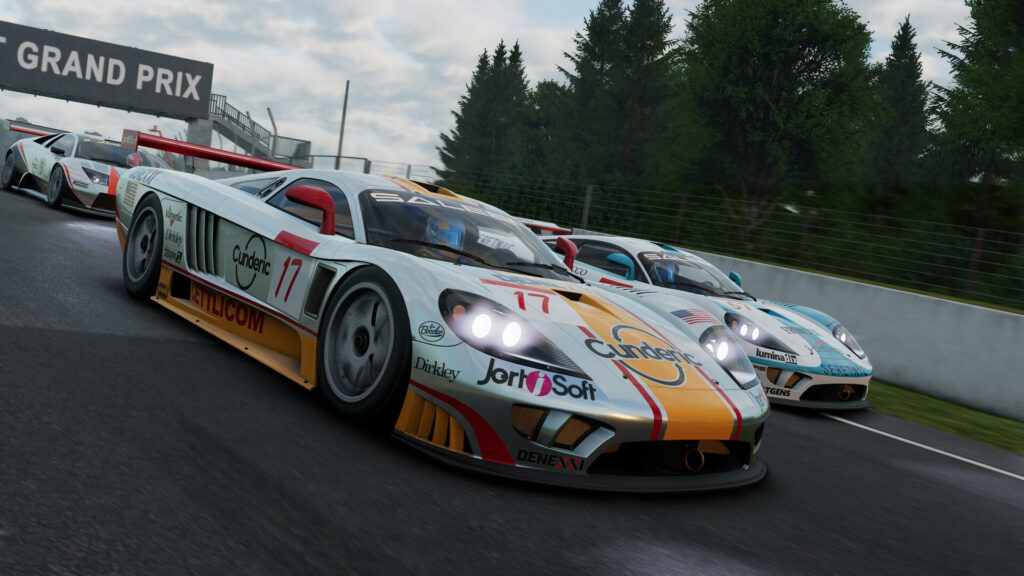
Platform-Specific Advantages
Each platform offers unique benefits tailored to different player preferences:
PC Platform Benefits
- Highest AI opponent count (32 cars vs 16 on consoles)
- Upcoming VR support for immersive racing
- Native triple-screen support (post-launch)
- Maximum graphics customization options
- UDP telemetry data for external applications
- Broader peripheral compatibility
- Fastest update deployment
PlayStation 5 Benefits
- DualSense adaptive trigger resistance for brake feel
- Haptic feedback for road surface sensation
- Optimized SSD loading for minimal wait times
- Integrated social features
- Stable, consistent performance target
- No graphics driver concerns
Xbox Series X|S Benefits
- Smart Delivery automatic optimization
- Quick Resume for instant game switching
- Xbox Game Bar integration
- Stable platform ecosystem
- Series S affordability option
- Xbox Game Pass integration possibilities
Launch Timing and Availability
Project Motor Racing launched simultaneously across all platforms on November 25, 2025, with no early access period or platform exclusivity windows.
Global Launch Times
GMT: 1:00 PM (London) CET: 2:00 PM (Central Europe) EST: 8:00 AM (Eastern US) PST: 5:00 AM (Pacific US)
The simultaneous launch ensures cross-platform multiplayer works immediately, avoiding the fragmented release schedules that plague some multi-platform racing games.
Play Project Motor Racing today @ 2Game!
Complete Project Motor Racing platforms guide covering PC, PlayStation 5, and Xbox Series X|S availability, system requirements, features, and cross-platform support details.
Project Motor Racing Complete Car List: Every Confirmed Vehicle on Day One!
Project Motor Racing launched on November 25, 2025, bringing over 70 meticulously crafted racing machines to PC, PlayStation 5, and Xbox Series X|S. Developed by Straight4 Studios and published by GIANTS Software, this spiritual successor to Project CARS focuses entirely on sports car racing with uncompromising authenticity.
The car roster spans nearly five decades of motorsport history, from legendary Group C prototypes to cutting-edge Le Mans Hypercars. Every vehicle carries official manufacturer licensing and has been tuned using input from real professional drivers through Straight4's Factory Driver Program.
It's a given that the roster will only grow from this point onwards, too. Whether through free content updates or paid DLC and expansion packs, a game like PMR needs a carefully curated but ever-expanding stable of awesome racing platforms to choose from, and that's precisely what Straight4 Studios intends to deliver. Here's the full list, with commentary attached to each and every day-one vehicle!
Play Project Motor Racing today @ 2Game!
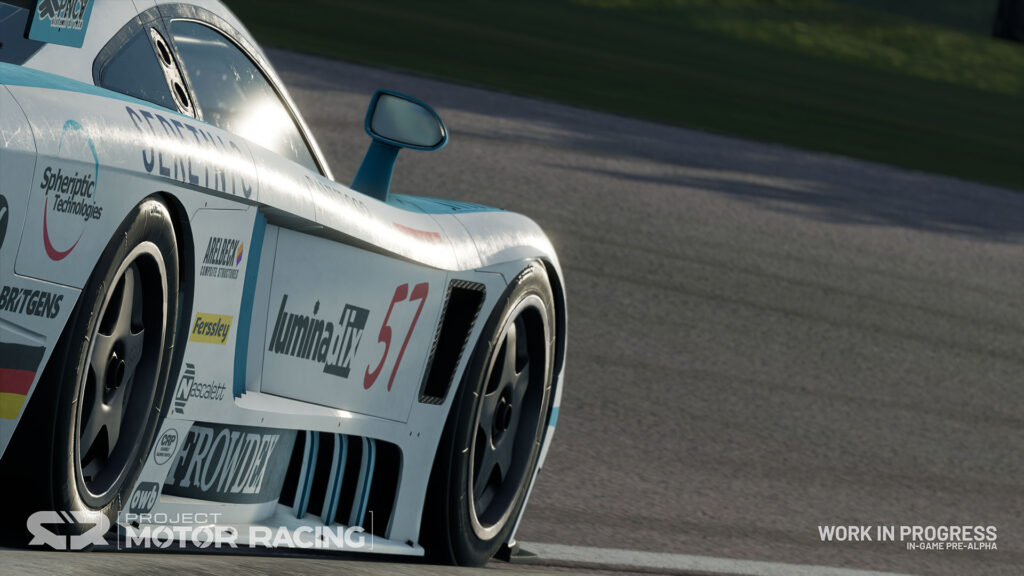
Group C Legends
The Group C era represents one of motorsport's golden ages, and Project Motor Racing captures three of its most iconic machines:
Porsche 962C
The dominant force of Group C racing, with multiple Le Mans victories and countless endurance racing triumphs throughout the 1980s and early 1990s.
Mazda 787B
The only Japanese manufacturer to win Le Mans outright, this rotary-powered legend delivered an unforgettable victory in 1991 with its distinctive green and orange livery
Mercedes-Benz Sauber C9
Mercedes' return to top-level prototype racing, the C9 showcased German engineering precision with its twin-turbo V8 and aerodynamic excellence.
GT1 Championship Icons
The late 1990s GT1 category produced some of the most extreme road-based racing cars ever conceived:
Porsche 911 GT1-98
The evolution of Porsche's Le Mans-winning GT1 program, featuring advanced aerodynamics and a mid-mounted flat-six engine derived from the 962C.
Panoz Esperante GTR-1
An American challenger that combined striking visual design with competitive performance, representing the ambitious vision of Don Panoz's racing program.
Classic GT Championship
This class celebrates the mid-2000s FIA GT Championship era that inspired much of Project Motor Racing's development:
Aston Martin DBR9
The British manufacturer's return to international GT racing, powered by a thunderous 6.0-liter V12 engine and wrapped in stunning carbon fiber bodywork.
Chevrolet Corvette C5-R
America's endurance racing weapon that proved the Corvette platform could compete with Europe's finest on tracks worldwide.
Lamborghini Murciélago R-GT
The track-focused version of Lamborghini's flagship supercar, bringing Italian flair and V12 performance to the GT Championship.
Lister Storm
A rare British challenger that combined classic racing heritage with modern engineering, featuring a massive 7.0-liter V8 engine.
Saleen S7-R
The racing version of America's first true supercar, with distinctive aerodynamics and exceptional performance credentials.
Modern Cup Series
Two generations of Porsche's legendary one-make series are represented:
Porsche 911 GT3 Cup (992)
The latest iteration of Porsche's cup car program, based on the current 992-generation 911 platform with track-optimized aerodynamics and suspension.
Porsche Carrera Cup 964
A throwback to the early days of Porsche's customer racing program, featuring the classic air-cooled flat-six engine and timeless 964 design.

GT3 World Championship
Modern GT3 racing is well-represented with nine confirmed vehicles spanning multiple manufacturers:
Audi R8 LMS GT3 Evo 2
One of the most successful GT3 platforms ever created, with over 300 championship titles worldwide since its 2009 debut.
Ford Mustang GT3
The 2023 model represents Ford's return to international GT3 competition, bringing American muscle to global racing series.
Lamborghini Huracán GT3 EVO2
The latest evolution of Lamborghini's customer racing program, combining Italian styling with proven competitive performance.
Aston Martin Vantage GT3 (2022)
The current-generation Aston Martin GT3 challenger, featuring refined aerodynamics and improved reliability.
Aston Martin Vantage GT3 Evo
The previous-generation Vantage that established Aston Martin as a serious GT3 competitor across multiple racing series.
Porsche 911 GT3 R (992.1)
The track-focused racing version of Porsche's iconic sports car, optimized for customer teams worldwide.
Acura NSX GT3 Evo 22
Honda's hybrid supercar adapted for GT3 competition, representing Japanese engineering excellence in international racing.
Chevrolet Corvette Z06 GT3.R
The track version of Chevrolet's most hardcore production Corvette, bringing American innovation to GT3 grids.
Mercedes-AMG GT3
Mercedes' successful customer racing platform that has achieved victories in major endurance races worldwide.
GT4 Amateur Racing
The GT4 category provides a stepping stone to professional racing with six confirmed models:
Aston Martin Vantage GT4
A more accessible entry point to Aston Martin racing, maintaining the brand's elegant design and V8 power.
Audi R8 GT4
The entry-level version of Audi's successful R8 racing program, perfect for amateur racers and driving enthusiasts.
Ford Mustang GT4
Ford's customer racing offering that brings American performance to amateur racing series worldwide.
Mercedes-AMG GT4
Mercedes' accessible racing platform that maintains the brand's performance heritage in a customer-friendly package.
Nissan Z GT4
The latest generation of Nissan's sports car heritage, adapted for modern GT4 competition with Japanese reliability.
Toyota GR Supra GT4 Evo
Toyota's return to international sports car racing, featuring the legendary Supra nameplate in modern GT4 form.
N-GT Specialists
This unique class celebrates boutique manufacturers and specialized racing machines from the early 2000s:
Gillet Vertigo
A Belgian track specialist that combined lightweight construction with massive power for an unforgettable driving experience.
Morgan Aero8 GT(N)
Traditional British craftsmanship meets modern racing technology in this unique aluminum-bodied competitor.
Mosler MT900R
An American track weapon that prioritized pure performance over comfort, featuring a Chevrolet LS1 V8 engine.
Porsche 911 996 GT3 RSR
The racing version of the water-cooled 996 generation, representing a crucial transition period in Porsche's racing history.
TVR T400R
British engineering at its most extreme, combining lightweight construction with thunderous V8 power and distinctive styling.
Marcos Mantara LM600
A rare British racing machine that showcased innovative engineering and striking aerodynamic design.
Le Mans Hypercars & LMDh
The pinnacle of modern endurance racing is represented by six cutting-edge prototypes:
Lamborghini SC63
Lamborghini's stunning entry into top-level prototype racing, combining Italian design flair with hybrid technology.
Aston Martin Valkyrie Hypercar
The track version of Aston Martin's revolutionary hypercar, featuring advanced aerodynamics and hybrid power.
Porsche 963
Porsche's return to LMDh competition, building on decades of endurance racing expertise with modern hybrid technology.
Toyota GR010 Hybrid
The Japanese manufacturer's Le Mans-winning hypercar that showcases hybrid technology and aerodynamic efficiency.
Acura ARX-06
Honda's LMDh entry representing Japanese engineering excellence in the world's most competitive endurance racing category.
Cadillac V-Series.R
General Motors' luxury brand returns to top-level racing with this sophisticated LMDh challenger.
Classic Prototypes
The LMP category includes three historically significant machines:
Audi R8 LM900
Not to be confused with the GT car, this is Audi's legendary Le Mans prototype that secured multiple victories in the early 2000s.
Panoz LMP-1 Roadster-S
An open-cockpit prototype that represented American innovation in international endurance racing.
Cadillac Northstar LMP-02
General Motors' ambitious attempt to conquer Le Mans with advanced technology and distinctive styling.
1970s Sports Cars
Two legends from motorsport's most glamorous era:
Lola T70 Mk3B GT
A Can-Am and sports car racing legend that dominated tracks across America and Europe with its distinctive wedge design.
Porsche 917K
Perhaps the most famous racing car ever built, the 917K defined an era with its speed, beauty, and legendary Le Mans victories.
IMSA GTO Muscle
Four examples of American touring car racing at its most powerful:
Roush Mercury Cougar XR-7
Jack Roush's engineering expertise applied to Mercury's luxury coupe, creating a formidable IMSA competitor.
Chevrolet Camaro Z28 IMSA GTO
The classic American muscle car adapted for professional racing with advanced aerodynamics and racing modifications.
Audi 90 quattro IMSA GTO
European sophistication meets American racing, featuring Audi's legendary all-wheel-drive system.
Mazda RX-7
The rotary-powered Japanese sports car that proved alternative engine designs could compete at the highest level.
Modern GTE Championship
Seven confirmed GTE machines represent the pinnacle of GT racing:
Aston Martin Vantage GTE 2020
The most recent evolution of Aston Martin's successful GTE program, optimized for endurance racing competition.
Chevrolet Corvette C7.R 2017
The previous generation of Chevrolet's endurance racing weapon that achieved multiple class victories worldwide.
Chevrolet Corvette C8.R 2020
The mid-engine revolution comes to endurance racing with this radical departure from Corvette tradition.
Ford GT LM GTE 2020
Ford's return to Le Mans glory, celebrating the 50th anniversary of the GT40's legendary victories.
Porsche 911 RSR GTE 2020
The ultimate evolution of the 911 racing platform, featuring a mid-mounted engine and cutting-edge aerodynamics.
Two Additional GTE Cars
Straight4 Studios has confirmed two more GTE vehicles will be announced, expanding this competitive class further.
Entry-Level Racing
Mazda MX-5 (ND) Trophy
The perfect starting point for aspiring racers, featuring the latest generation MX-5 in spec racing configuration with carefully balanced performance.
Looking Ahead: DLC Expansions are On The Way!
Project Motor Racing's Year 1 Season Pass will add over 35 additional cars across four content packs:
- Group 5 Revival Pack (Launch Day): Five 1970s touring car legends including the BMW 320 Turbo Group 5
- Japanese GT500 Pack (Q1 2026): Modern Super GT machinery from Japan's premier racing series
- GT Legends Pack (Q2 2026): Classic touring cars and GT machines
- V8 Power Pack (Q3 2026): High-powered racing machines from various eras
- Endurance Racing Expansion (Q4 2026): Additional prototype and endurance-focused content
Play Project Motor Racing today @ 2Game!
Complete Project Motor Racing car list featuring 70+ licensed vehicles from Group C legends to modern Hypercars. Every confirmed car across 15 racing classes detailed!
Reanimal Collector’s Edition vs Digital Deluxe: Which One Is Worth Your Money?
If you’ve ever dreamed of mulling over your life choices with a pig statue, the Reanimal Collector’s Edition will feel like it was made for you. Not that kind of fan? Then the Digital Deluxe Edition might be your perfect match.
As ever, it’s the ultimate showdown. Physical indulgence versus digital convenience. Lavish extras versus a streamlined bundle that delivers all the horror, story, and DLC without cluttering your shelves or draining your wallet. One offers a full-on tactile experience with statues, art books, and maps; the other is a sleek, instant-access digital package. So… Collector’s Edition or Digital Deluxe — which one deserves your pre-order?
Pre-Order Reanimal Digital Deluxe @ 2Game Today To Save Money!
Digital Deluxe Edition — All the Horror, Zero Heavy Lifting

Forget the statues and the art book that could double as a doorstop. With the Digital Deluxe Edition, Tarsier Studios has distilled Reanimal down to what really matters: pure, unadulterated terror.
Inside this digital dream bundle, you get:
- The full game (digital) — every jump scare, every twisted monster, every tense boat ride across the hellish island.
- Season Pass — all three DLC chapters included, so your nightmares don’t stop at the credits.
- Foxhead & Muttonhead mask DLC — because nothing says “I’m emotionally unprepared” like running through a swamp while wearing a giant fox head.
That’s it. It’s instant access, with every bit of DLC included, and none of the clutter you don’t. That is, no bulky boxes to trip over, and no statues knocking over your coffee mid-jump scare.
Pre-Order Reanimal Digital Deluxe @ 2Game Today To Save Money!
The Collector’s Edition — For Hardcore Fans With Big Shelves

For hardcore fans who like physical memorabilia, however, the Collector’s Edition is a spectacle. With everything you can think of, short of summoning a real Pig Monster into your living room, it includes:
- Physical Standard Edition + Steam code (so you get both digital and physical access)
- Pre-Order DLC — Foxhead & Muttonhead masks (same as Digital Deluxe)
- Season Pass — all three DLC chapters included (same as Digital Deluxe)
- Pig Statue — fully painted PVC, 25 x 13 x 12 cm, the star of your collection
- Bucket Mini Statue — 12 cm of adorable and unsettling charm
- Hardcover 80-page Artbook — showcasing concept art, monsters, and the darkly beautiful world of Reanimal
- Map Poster — 20.1 x 9.8 inches, perfect for plotting your next nightmare journey
- Metal Key Ring — a small but classy token of horror fandom
- Sticker Sheets — 21 stickers to decorate your laptop, console, or diary with creeping dread
- Premium Collector’s Box — sturdy, high-quality cardboard for safe, stylish storage
It’s fun. It’s lavish. And it’s the ultimate display of horror fandom. If you're just here for the gameplay, you already get the story, DLC, and masks in the Digital Deluxe Edition, but if you want the pig, you've got to go Collector's.
So, Reanimal Collector’s Edition vs Digital Deluxe: Which One Do You Buy?

The Collector’s Edition is undeniably impressive. If you’re a hardcore fan who wants the full, immersive experience — including statues, an art book, maps, and all the tactile goodies — it’s absolutely worth considering.
But for most gamers, the Reanimal Digital Deluxe Edition is the clear winner. It delivers the heart of the horror, the full story, and every DLC, all while keeping your shelves, your wallet, and your sanity intact. Simply pre-order, fire up your platform of choice, and get ready for the kind of nightmares that only Tarsier Studios can conjure up.
Whichever edition you go for, don't forget to stock up on tissues - you might cry!
Pre-Order Reanimal Digital Deluxe @ 2Game Today To Save Money!
CHECK OUT: When Is Reanimal Coming Out? (And Why We Are Not Emotionally Ready)
Pig statue?
Does Borderlands 4 Have Crossplay? A Complete Explanation!
Yes, Borderlands 4 has full crossplay support. You can team up with friends across PlayStation 5, Xbox Series X|S, PC (Steam and Epic Games Store), and Nintendo Switch 2. The game launched on September 12, 2025, with Nintendo Switch 2 support following on October 3, 2025.
How Borderlands 4 Crossplay Works
Crossplay requires a free SHiFT account linked to your Borderlands 4 profile, which serves as the backbone for cross-platform multiplayer. Once you've set up your SHiFT account, you can join sessions with friends on any supported platform.
The crossplay system supports up to 4 players in online cooperative sessions, maintaining the series' signature chaotic multiplayer experience. Additionally, PlayStation 5 and Xbox Series X|S versions include 2-player split-screen support, allowing you to play locally while connecting with online friends across different platforms.
Play Borderlands 4's free Bounty Pack 1 content now!
Supported Platforms for Crossplay
Borderlands 4 crossplay works across these platforms:
- PC via Steam
- PC via Epic Games Store
- PlayStation 5
- Xbox Series X|S
- Nintendo Switch 2
All platforms launched with full crossplay support, with Nintendo Switch 2 joining the roster in early October 2025.
Gearbox Software and 2K Games have confirmed full crossplay support for all platforms, building on the foundation they established with Borderlands 3.

Setting Up Crossplay in Borderlands 4
Getting crossplay running is straightforward:
- Create a SHiFT Account: Visit the Gearbox SHiFT website or create one in-game
- Link Your Platform: Connect your gaming platform to your SHiFT account
- Enable Personal Crossplay: Ensure your personal crossplay settings are turned on in the game options
- Invite Friends: Use your SHiFT friend list to invite players across platforms
If Personal Crossplay is disabled, only players on the same platform can join your session, so double-check this setting if you're having connection issues.
What About Cross-Progression?
Borderlands 4 launched without cross-progression or cross-save functionality, and these features remain unavailable as of late November 2025. Your character progress, loot, and save files are still locked to the platform where you created them.
However, Gearbox remains committed to delivering these features. Creative Director Graeme Timmins confirmed in recent updates: "We're still working on cross-save, it is coming but requires a lot of moving parts to be in place. We will definitely share more as we get more confident with the date, but we're committed to having that feature out to the community."
Randy Pitchford has also reiterated the studio's commitment to cross-save during various post-launch presentations, acknowledging that many players game across multiple platforms and deserve that flexibility.
Why Crossplay Matters for Borderlands 4
Borderlands has always thrived on cooperative gameplay, and crossplay removes the platform barriers that previously split friend groups. The game is designed for co-op from the ground up, with drop-in/drop-out action and dynamic level scaling to keep everyone engaged regardless of their character level or platform choice.
You can even mix local and online play - two friends playing split-screen can join up with two other players online to form a full party of four, creating flexible gaming sessions that adapt to how your group wants to play.
Post-Launch Updates and Improvements
Since launch, Gearbox has consistently improved crossplay functionality. The September 15, 2025 update addressed early stability issues and connection problems between platforms, while subsequent patches have refined the experience based on community feedback.
Early launch issues with infinite loading screens during crossplay sessions have been resolved, and the connection process between players on different platforms now runs much smoother than at release. The development team has shown strong commitment to supporting crossplay with regular updates and bug fixes.
While cross-progression remains absent, Gearbox continues working toward this feature. For now, choose one platform as your primary if you own the game on multiple systems. The crossplay experience itself has matured well since launch, making Borderlands 4 an excellent choice for cross-platform gaming groups.
Play Borderlands 4's free Bounty Pack 1 content now!
Borderlands 4 features full crossplay across PC, PlayStation 5, Xbox Series X|S, and Nintendo Switch 2. Learn setup requirements, current cross-progression status, and platform compatibility.
When Is Reanimal Coming Out? (And Why We Are Not Emotionally Ready)
There are two types of Little Nightmares fans in this world: The ones who say, “Oh, cool, the devs have a new horror game coming.” And the ones who start stress-eating a family-size bag of crisps as they prepare for Tarsier Studios to crank up the emotional trauma dial. Whichever group you're in, here are the answers, reassurances, and digital hugs you’re seeking.
Pre-Order Reanimal @ 2Game To Enjoy Discounts!
Exactly When is Reanimal Coming Out?

Let's not beat around the bush. Reanimal launches on February 13, 2026. Literally the day before Valentine’s Day. It's almost as if Tarsier Studios looked at the calendar, shrugged, and said: “Love? No thanks. Let's have some co-op trauma instead.”
Whether you’re playing it with your partner or forcing your best mate to endure monster-induced claustrophobia, Reanimal arrives just in time to shatter chocolate hearts everywhere.
Where can you play it?
Basically, if it has buttons, you’re good to go. You can scare yourself silly on:
- PC (Steam) — demo already available
- PS5 — demo already available
- Xbox Series X|S — demo already available
- Nintendo Switch 2 — demo coming later, closer to launch
So yes, you can test your nerves before 2026 rolls in.
What is Reanimal anyway?

You play as a brother–sister duo, exploring a twisted island to rescue missing friends. There’s boat travel, land exploration, environmental puzzles, stealth sequences, and enough tension to snap a steel cable.
Expect co-op done properly, local or online; a shared camera for yelling; Unreal Engine 5 for nightmares made flesh; and environmental storytelling disturbing enough for your therapist. Think Little Nightmares, only now the nightmares are hitting the gym and doing emotional damage side quests. It's fun, but you may cry.
Should you be excited?
Yes, definitely. But also: be afraid. Be very afraid. Reanimal is Little Nightmares’ spiritual successor — a stunning, soulful, and deeply unsettling cinematic platformer. The kind of horror that whispers “boo” while shaking you to the core. And honestly, we can’t wait to be emotionally dismantled all over again!
Pre-Order Reanimal @ 2Game To Enjoy Discounts!
Are you ready?
All STALKER 2 Door and Safe Codes – Stories Untold Included!
One of the things STALKER 2: Heart of Chornobyl does particularly well is its penchant for atmosphere and an excellent sense of exploration. Thing is, you can't reach every single loot drop by climbing, jumping, and gunning down mutants. Sometimes, you'll come across a code-locked door or safe, and though it's not outright difficult to figure them out, you may just not want to bother. Well, those days are now gone, because we can help!
We've compiled every verified door and safe code currently available in STALKER 2, organized by region to help you efficiently collect these hidden treasures during your exploration. Ranging from pre-customized unique weapons to gun attachments, armor sets, all the way to a beloved classic: health kits and vodka, you ideally want to grab each and every stash you come across. This list will help you do just that.
Get your STALKER 2 Steam key here at 2Game!

Lesser Zone Door Codes
Sphere Underground Tunnel Door
Code: 2765
This underground passage provides quick access to the Sphere during certain story missions. The door becomes particularly useful when you want rapid entry without dealing with surface-level threats. A must for Expedition Mode.
Garbage Region Codes
Electric Field Safe
Code: 1708
Located within a building near the Electric Field Anomalous Area, this safe contains ammunition, food supplies, and medical items. The building can be accessed from the south end of the anomaly field.
Factory Basement Lab Door
Code: 2605
Found in the basement of the Factory facility, this massive steel door leads to underground laboratory areas. Becomes accessible during the "Just Like the Good Old Days" mission and advances story progression.
Factory Upper Floor Grate
Code: 2603
After progressing through the lower laboratory, use this code to access the upper floor grate. This exit route becomes necessary during the "Answers Come at a Price" quest line.
Army Warehouses Container
Code: 0690
This secured container in the Army Warehouses holds valuable armor and equipment. The area is controlled by Duty faction members who won't interfere with your looting.
Rostok Region Codes
Mindscrew Tunnel Door
Code: 1268
Located in the western tunnel of the Mindscrew area, this door leads to a warehouse containing the Psi Installation quest item and various supplies. Watch for electrical anomalies in the vicinity.
Military Safe (North Barracks)
Code: 195726
This six-digit combination unlocks the military safe in Rostok's northern barracks. Contains the RPM-74 Rubber Coating Blueprint plus healing items, food, and ammunition. The code can be found by collecting three officer PDAs or entered directly.
Wild Island Codes
Intercom Tower Safe
Code: 030794
Located in a small building next to the communication tower, this safe contains the GP-25 underslung grenade launcher and additional ammunition. Clear the 3-4 bandits guarding the area before attempting access.
Zaton Region Codes
Cooling Towers Container Door
Code: 2777
Located northwest of the main Cooling Towers area, this shipping container holds medical supplies, drinks, and food rations. The area is frequently contested by hostile mercenaries and Monolith troops.
Waste Processing Station Stash
Code: 2711
This Guide's Stash contains randomized healing items, food supplies, and equipment. Located in the southeastern part of the Waste Processing Station area.
Railway Maintenance Facility Door
Code: 2468
Found near the railway tracks in Zaton, this locked room contains medical supplies, ammunition, and the PS3-5I Hawk equipment piece. Particularly valuable for early-game players.
Monolithian Stash (Shift Change Quest)
Code: 0505
Accessible during the "Hot on the Trail" and "Shift Change" missions at the Waste Processing Station. The code hint can be found on a Monolith member's PDA.
Dr. Dalin's Safe
Code: 2006
Located on the top floor of SIRCAA during "The Price of Truth" mission, this safe contains mission-specific items and valuable loot. Only accessible during or after the relevant story sequence.
Hydrodynamics Lab Door
Code: 4824
This facility door provides access to laboratory equipment and research materials in the Zaton region.
Hydroelectric Station Stash
Code: 0666
A secured stash near the hydroelectric facilities containing Zone survival supplies.
Yantar Region Codes
Scorcher Technical Tunnel Door
Code: 1287975
This seven-digit code unlocks a tunnel containing upgraded weapons and high-tier equipment. The lengthy combination reflects the valuable nature of the contents.
Dam Door
Code: 5578
Located in the dam buildings north of the Drainage area, this underground bunker entrance requires clearing rats with explosives. Contains a Kharod assault rifle and additional weapons.
Malachite Region Codes
Fairy Tale Pioneer Camp Safe
Code: 1861
Found in a demolished building southeast of the camp (outside the white circle marking the POI), this safe sits under a Gravity Anomaly. Requires generator activation before access. Contains four Anti-Radiation Drugs and five Army Medkits. The code appears on a note at Orbita Station.
Orbita Station Door
Code: 1995
This door is guarded by a Poltergeist during "The Man Who Sold The World" mission. Successfully entering rewards the Lab X15 Keycard and advances mission progression.
Pripyat Region Codes
Duga Hatch
Code: 2110
Located in a building north of Vehicle Park and east of Block D, this hatch is surrounded by Gravitational and Shard Anomalies. Contains a High-capacity Mark I Magazine and assorted medical supplies.
Journalist's Stash (Bookstore)
Code: 2021
Found on the 8th floor of a multi-story building in southeastern Pripyat near the bookstore. Contains a Beastmaster sniper rifle, Margach D-12MT shotgun, PSZ-21W Assault exoskeleton, and ammunition.
Fence's Stash (Southwest of CSC)
Code: 13263622
This eight-digit code opens an apartment stash in a multi-story Pripyat building. Contains high-tier medical supplies, various weapons including a Gauss gun, and other valuable equipment. The code is assembled from eight different PDA notes scattered throughout the game world.
Red Forest Codes
Lisovyi Door
Code: 240983
This six-digit combination unlocks a basement door in the Bloodsucker-infested village east of Yaniv. Despite the dangerous location, the basement contains valuable loot caches.

Other Quest-Specific Codes
Promin CMD Factory (Dawn of a New Day)
Code: 1976
Mission-specific code used during story progression.
Door Code (Various Locations)
Code: 8506
A four-digit code found at multiple secure locations throughout the Zone.
Tool Stash Code (Stories Untold)
Code: 0183
Tips for Code Usage
Remember that some codes only become available during specific missions or after completing certain story objectives. Generator activation may be required for certain electronic locks, particularly in areas with unstable power supplies.
The Fence's Stash code (13263622) represents the most complex puzzle in the game, requiring collection of eight separate PDA fragments. However, the keypad interface may require entering only the first seven digits due to technical limitations.
Always approach coded areas with caution, as valuable loot locations often feature dangerous anomalies or hostile creatures. The Zone never makes survival easy, even when you have the right combinations.
Get your STALKER 2 Steam key here at 2Game!
Still can’t get to the bottom of a particular door or safe code in STALKER 2? No problem, as we’ve got the full list right here, ready to go!
 English
  German
  French
  Portuguese
  Spanish
  Polish
  Dutch
Dutch